Flagship mobile engineering case study
LiveJood
A cross-platform offer and booking product carried from discovery through payment, confirmation, and post-booking access.
- Ownership
- Full build
- Platforms
- iOS + Android
- Domain
- Food & Drink · Offers · Booking
Project snapshot
The production surface at a glance.
- Role / ownership
- End-to-end Flutter build
- Product type
- Offer discovery and transactional booking application
- Platforms / status
- iOS + Android · Live
- Primary responsibility
- End-to-end Flutter delivery across interface implementation, product journeys, integrations, and release.
- Engineering areas
- Discovery, offer detail, booking, payment, QR access, account state, and cross-platform delivery.
- Verified technology
- Flutter · Dart · Firebase · REST API
The product challenge
One mobile journey, several stateful commitments.
The shipped product brings restaurant and service offers into one browsing experience, then carries a selected offer through availability, booking, payment, and later retrieval.
That creates a mobile-product challenge beyond displaying a catalogue: each step must preserve enough context for the next action, keep the user oriented, and make the resulting booking available after the transaction.
Ownership and responsibility
Full-build ownership across the mobile surface.
The supported record identifies Jood as an end-to-end Flutter build. Public evidence is strongest across the mobile application and delivery scope, so this case study does not imply ownership of the underlying business or backend infrastructure.
Product foundation
Shape a coherent cross-platform application spanning guest discovery, authenticated account behavior, and transactional journeys.
Interface and navigation
Implement the progression from searchable offers into detail, availability, confirmation, orders, and QR access.
Integration boundary
Connect the Flutter product to verified REST API and Firebase capabilities without exposing unsupported backend implementation claims.
Delivery responsibility
Carry the application through iOS and Android release, with live destinations on both public stores.
Engineering approach
Organize around the product journey and its integration boundaries.
The available evidence supports a mobile-side view of the system: product surfaces coordinate a sequence of user decisions, remote product data, authenticated capabilities, and platform delivery.
- 01
Product surfaces
Browse, detail, booking, payment, orders, QR, and account experiences.
- 02
Journey state
Selected offer, availability, booking context, confirmation, and order status.
- 03
Data boundary
Verified REST API and Firebase integrations associated with the Jood application.
- 04
Platform delivery
A Flutter codebase delivered to iOS and Android production destinations.
Evidence boundary. The source material does not document the server topology or a Jood-specific state-management package, so neither is presented as fact.
Transaction flow
Discovery becomes a recoverable booking.
The flow is presented as a static, readable sequence. The screenshots prove the visible product states; no animation is required to understand the handoff between them.
- 01
Discover
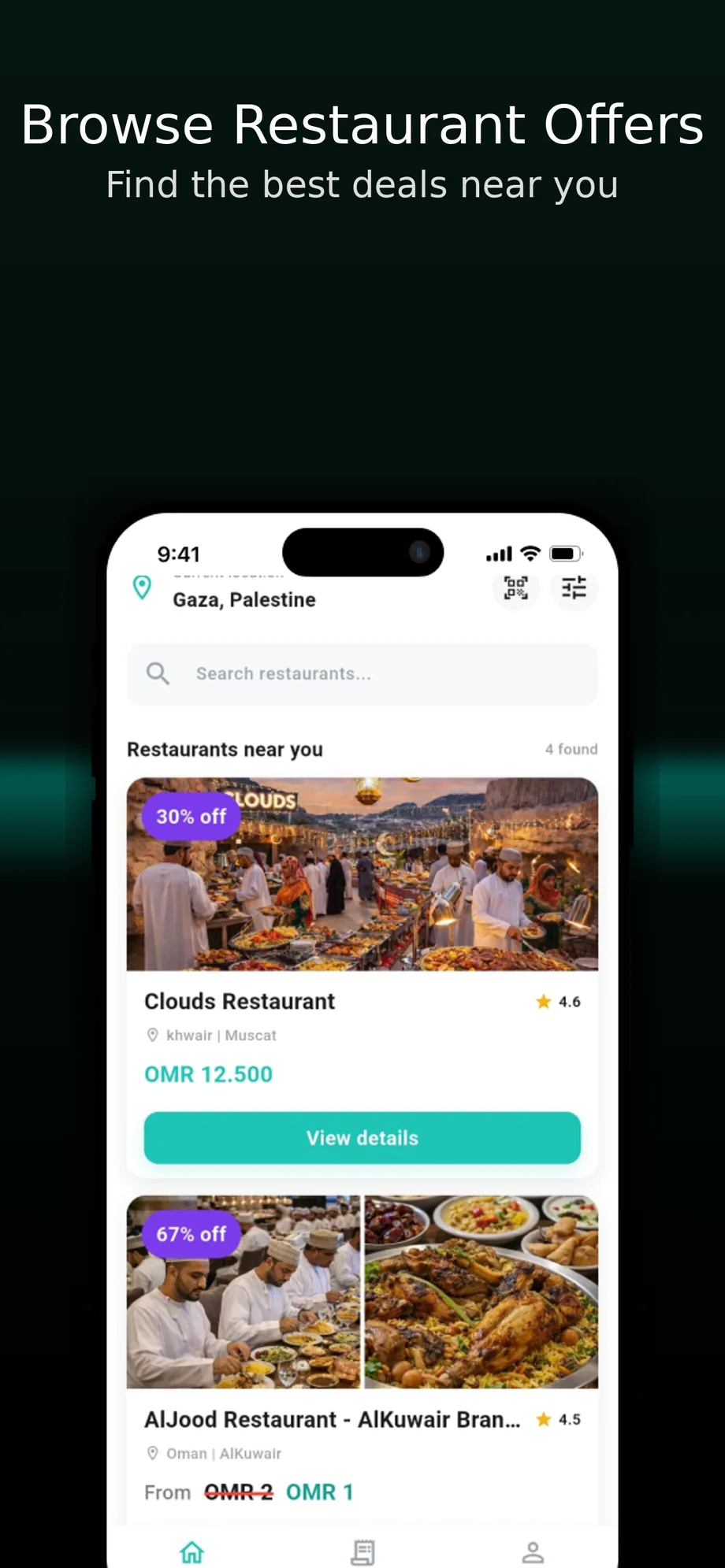
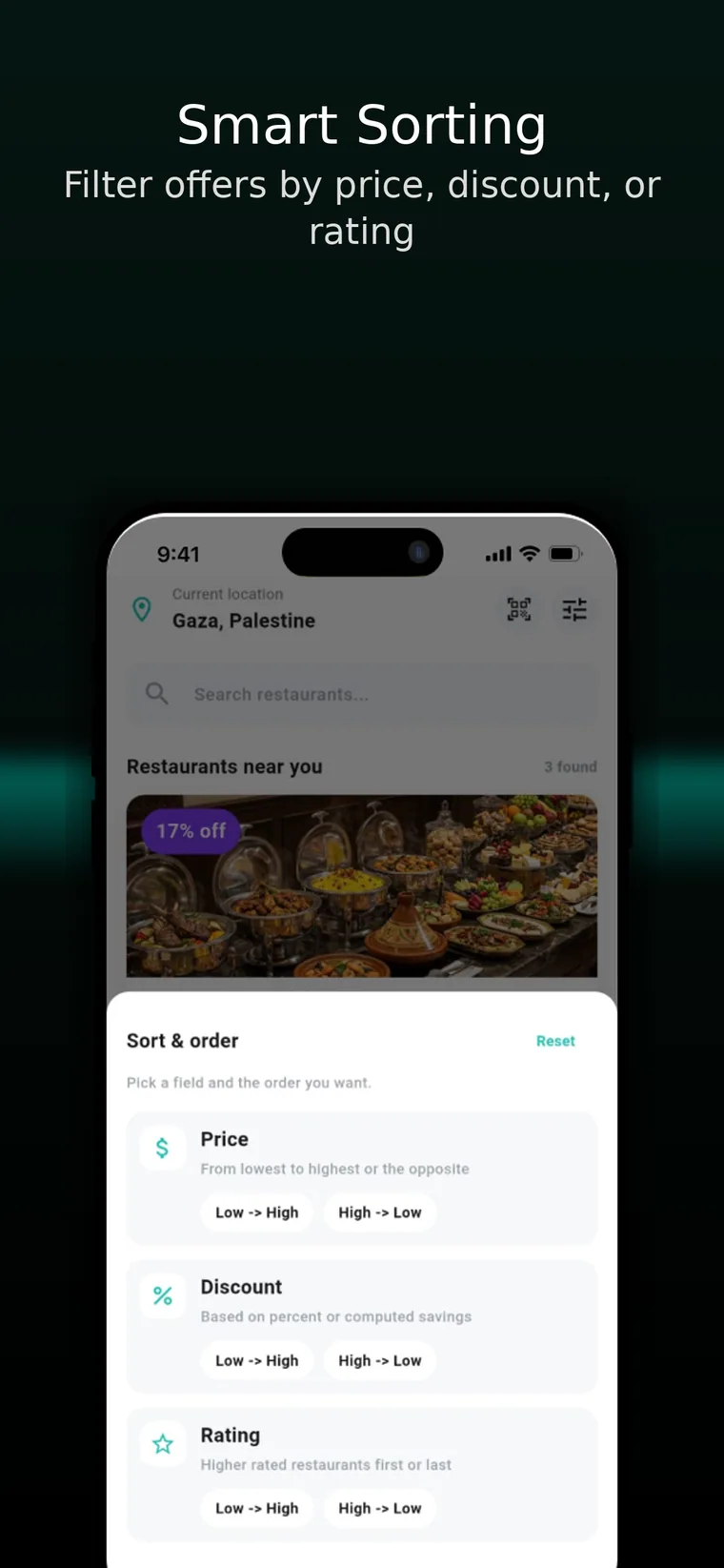
Browse nearby offers and compare visible price, discount, location, and rating cues.
- 02
Inspect
Open the restaurant or service context, review highlights, and move toward availability.
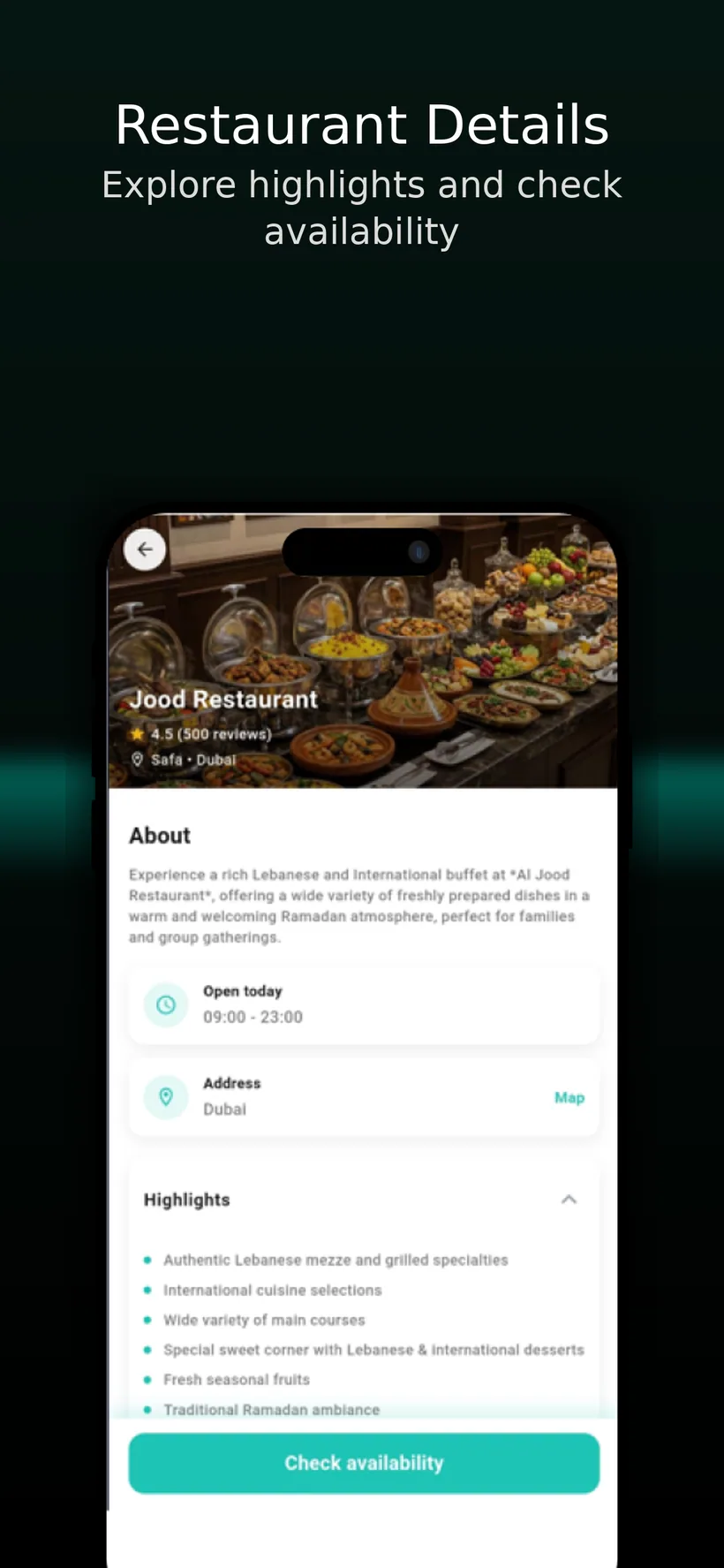
Offer context stays visible before commitment. - 03
Book
Choose a date, time, and available offer before advancing to confirmation.
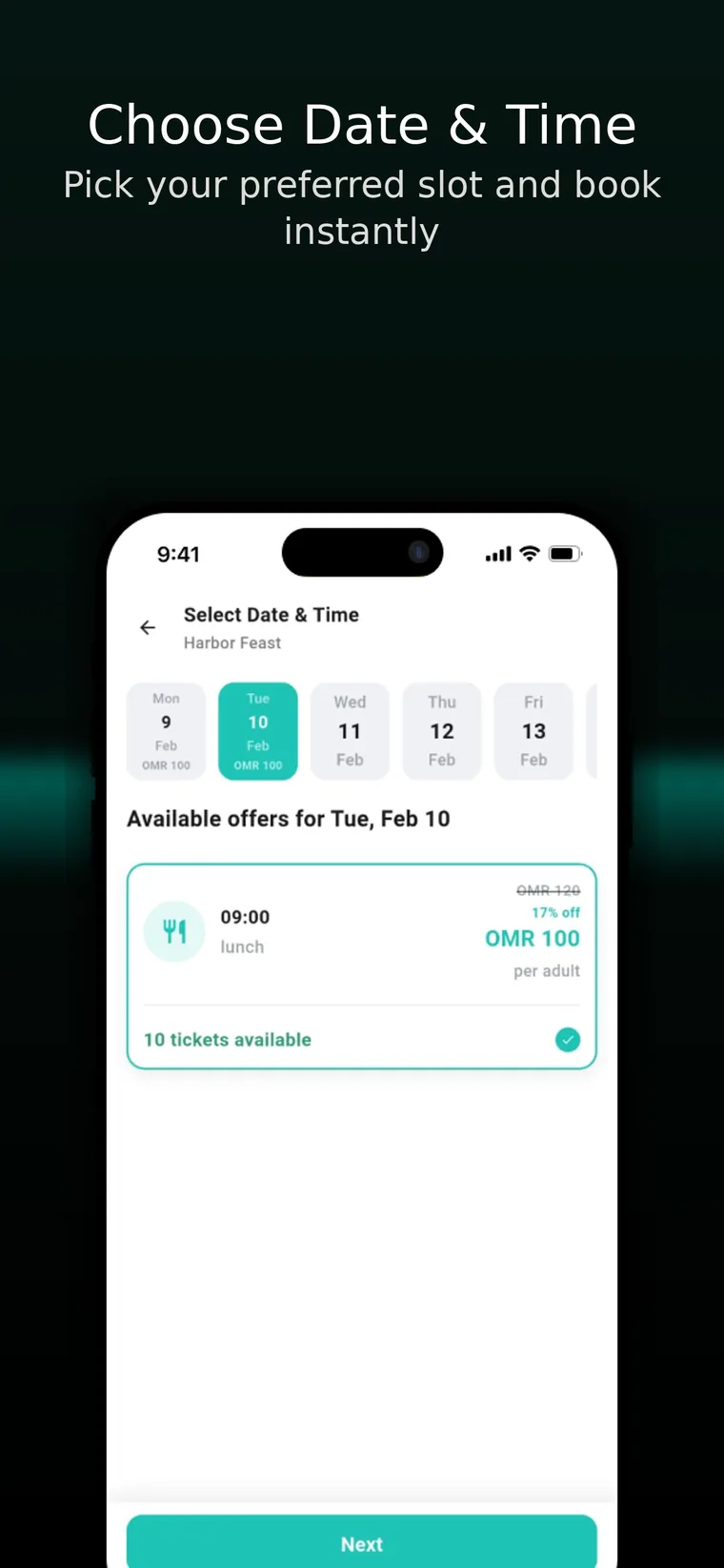
Availability is resolved before payment. - 04
Confirm and pay
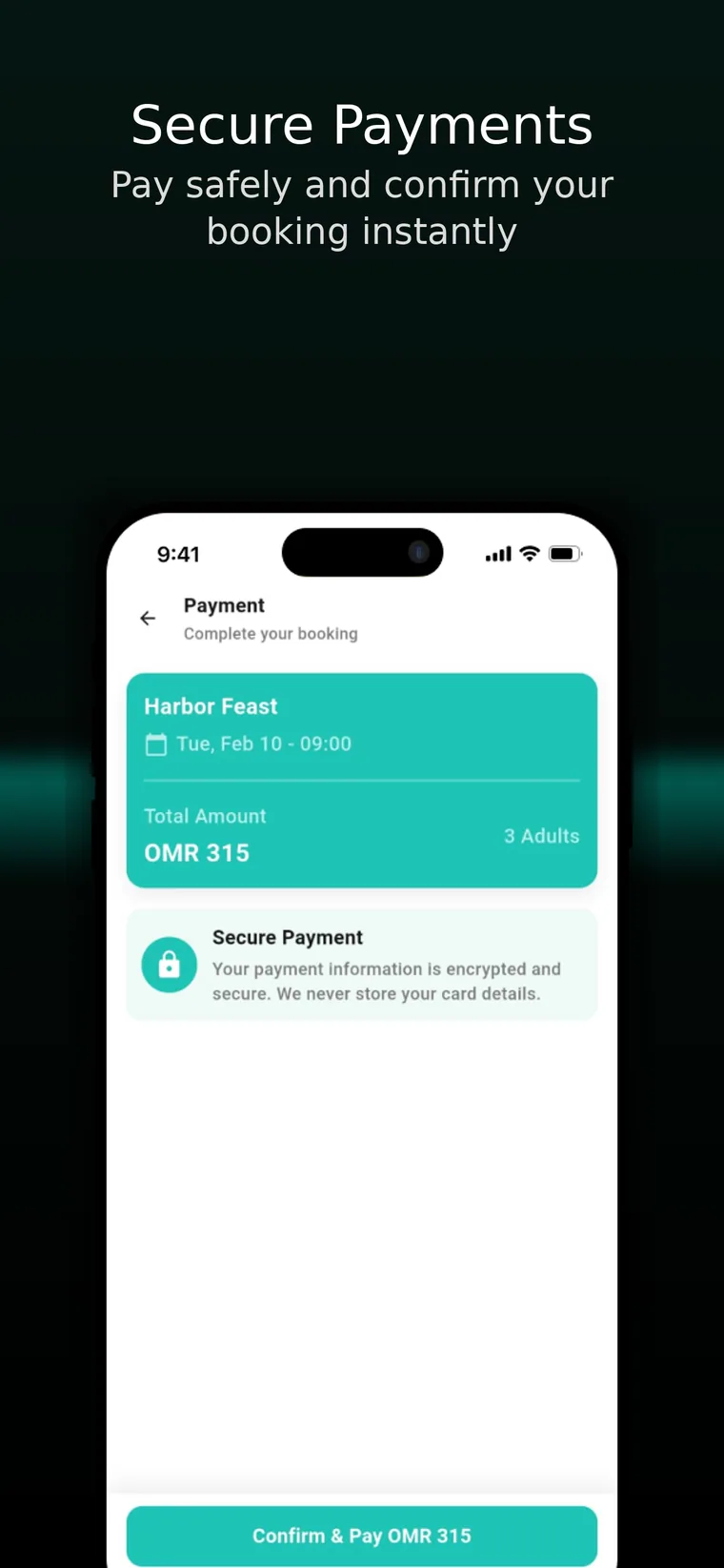
Review booking context and amount before completing the transaction.
- 05
Track and manage
Return to paid bookings, recover the booking reference, and open its QR access.
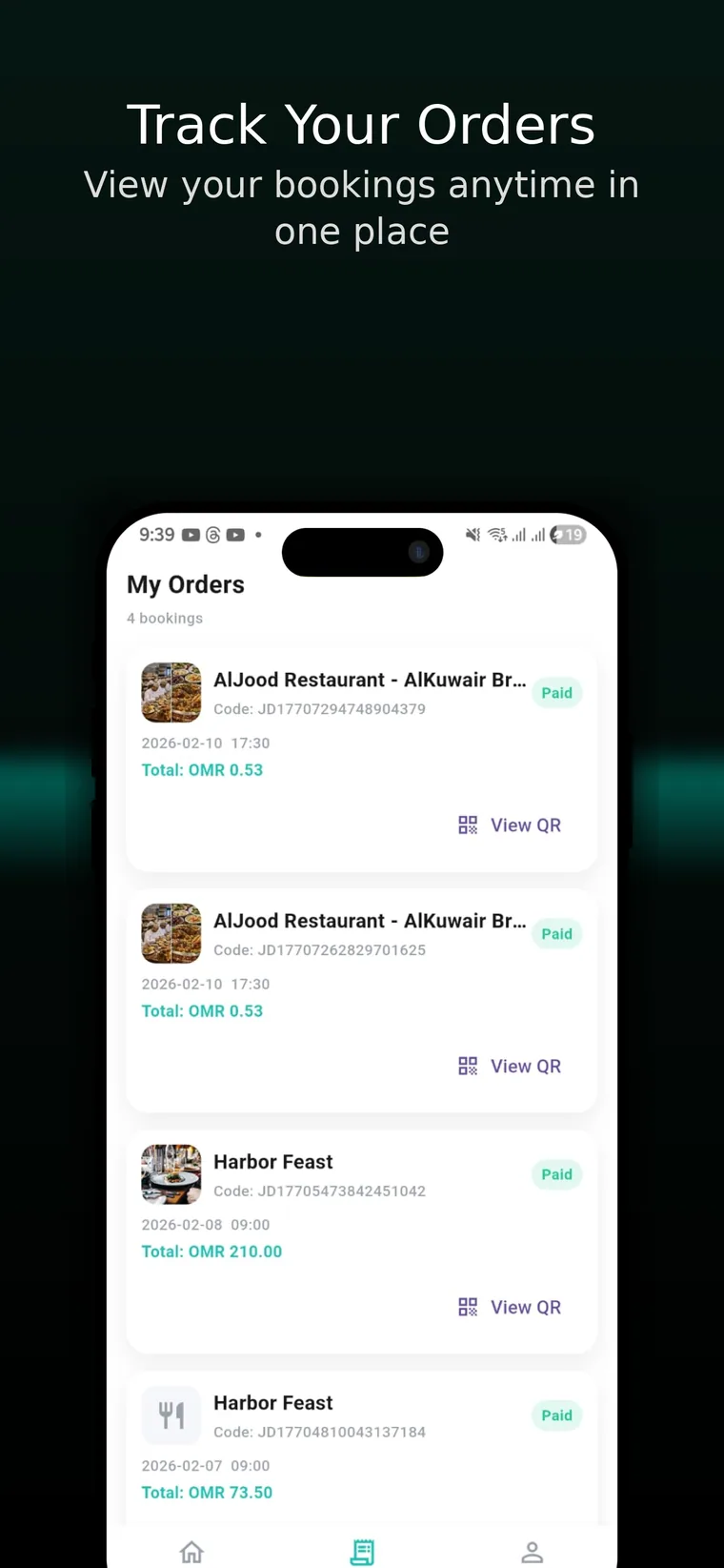
Completed bookings remain available after payment.
Engineering decisions
Small decisions that protect the whole journey.
Each decision is tied to visible product behavior. No undocumented framework or backend choice is presented as evidence.
Gate commitment with visible context
- Context
- A booking moves through offer choice, availability, attendee count, and payment.
- Decision
- Keep the selected venue, slot, and amount visible at the point where the user confirms payment.
- Why
- The user can verify the transaction context before committing to it.
Separate discovery from account commitment
- Context
- The product supports both quick exploration and account-dependent actions.
- Decision
- Allow a guest path into discovery while keeping sign-in and account creation available when the journey requires identity.
- Why
- Initial product value remains accessible without hiding the authenticated path.
Carry success into a durable order surface
- Context
- Payment completion is not the end of a visit-based booking journey.
- Decision
- Represent paid bookings in an order history with status, reference, schedule, amount, and QR access.
- Why
- The post-payment state remains recoverable when the user returns later.
Product states and resilience
Production thinking is visible in the handoffs.
The approved imagery does not expose every loading or network-error state. It does show several safeguards and persistent states that matter to a real transaction.
Validation gates
Authentication and registration actions remain unavailable until required input is present.
Pre-payment confirmation
Venue, schedule, attendee count, and total are shown before the final action.
Persistent success state
Paid status and booking details remain visible in order history after confirmation.
Visit recovery
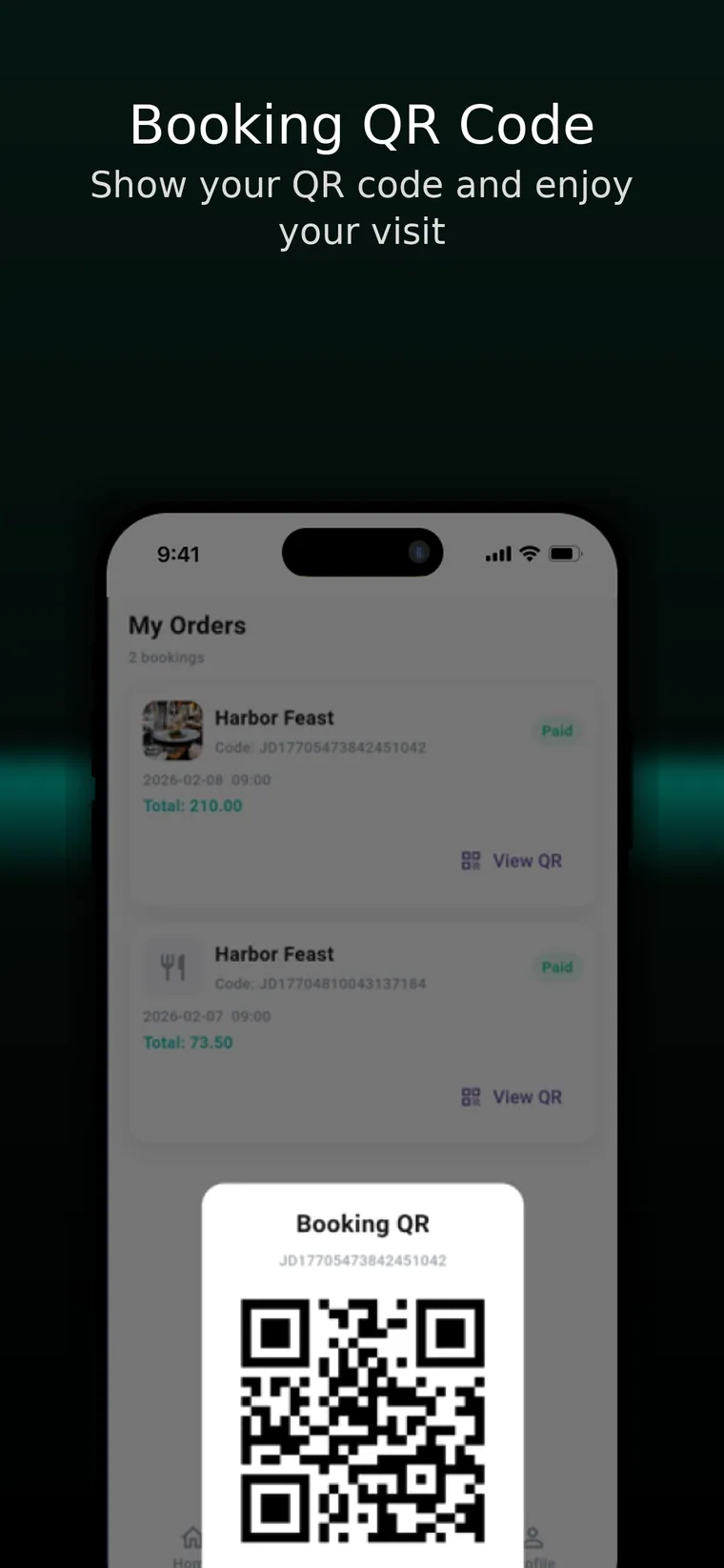
QR access is reachable again from the saved booking rather than only at checkout.
Not claimed. Loading, offline, retry, and server-error policies are not documented in the supplied evidence and are intentionally not claimed here.
Verified technology
Only the stack supported by the evidence.
- Mobile product
- Flutter · Dart
- Integration
- REST API · Firebase
- Delivery
- iOS · Android
Selected product evidence
Screens chosen for distinct responsibility—not volume.
These views add evidence for QR retrieval and structured offer sorting without repeating the core booking sequence.
Release responsibility
Delivered across both mobile platforms.
Jood is recorded as a production Flutter application with end-to-end ownership and cross-platform release responsibility.
The public destinations resolve to live Google Play and Apple App Store listings. No download, rating, revenue, or conversion metric is used as an engineering outcome.
Factual outcome
A shipped mobile journey, complete beyond checkout.
The defensible result is a production product that connects discovery, booking, payment, order state, and QR access across iOS and Android.
- Live Google Play and App Store destinations
- End-to-end Flutter ownership
- Discovery-to-booking transactional breadth
- Persistent order and QR access after payment
Continue the evidence
Next: Eureeca
A regulated investment experience for discovering and evaluating private equity deals and selected IPO opportunities, with portfolio tracking and rich deal information.